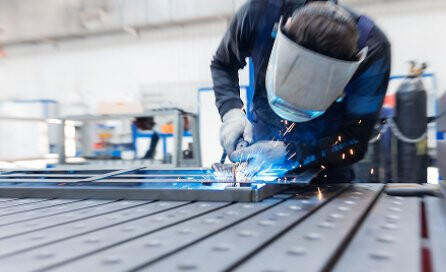
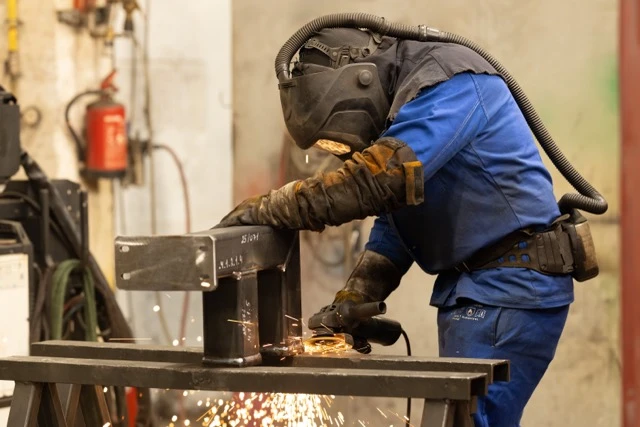
A shortage of industrial workers across Europe
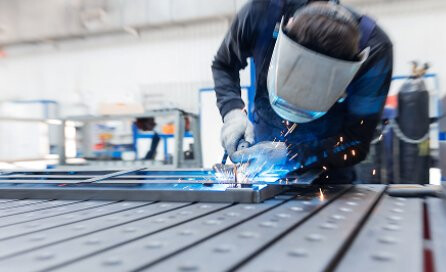
In many European countries, industrial companies have been reporting a growing problem for several years: the limited availability of qualified welders and steel structure fitters. This issue is not limited to a single market. It can be observed both in Western Europe and in Central and Eastern Europe.
According to the EURES Report on Labour Shortages and Surpluses in Europe, welders are listed as a shortage occupation in 23 European countries. Similar problems also affect occupations related to the preparation and assembly of metal structures, which are considered shortage occupations in 18 countries.
In practice, this means that the lack of workers in these professions is one of the most widespread labour shortages across the European economy. In EURES analyses, welding-related occupations appear among the most frequently reported shortages, alongside professions such as nurses and healthcare workers.
At the same time, there is no single official figure describing the exact scale of the shortage across Europe. However, data from various institutions clearly indicate that this is a long-term structural issue affecting many industrial sectors.
Ageing workforce in industrial trades
One of the main reasons behind the shortage is the age structure of workers in industrial professions.
In many European countries, a large proportion of welders and steel structure fitters obtained their qualifications in the 1990s or early 2000s. Today, many of these workers are approaching retirement age.
Forecasts published by the European agency Cedefop indicate that by 2035 around 4 million workers in occupations related to metals, machinery and industrial production will need to be replaced. Even if overall employment in these professions does not grow significantly, the generational replacement alone will require a large number of new workers.
At the same time, for many years the number of young people choosing vocational education and industrial professions has been lower than the needs of the labour market in many European countries.
Growing investments in infrastructure and energy
Demand for welders and steel structure fitters is also influenced by the increasing number of industrial and infrastructure projects across Europe.
In recent years, a significant share of investments has been related to:
- transport infrastructure
- energy generation
- shipbuilding
- offshore projects
- expansion of power networks and renewable energy
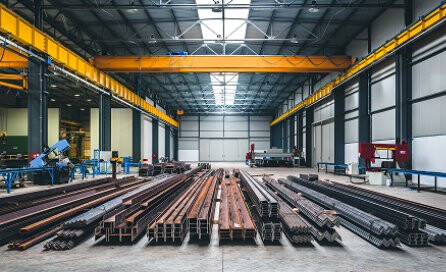
Europe’s energy transition and the rapid development of offshore wind farms have led to a growing number of projects requiring large steel structures. As a result, demand for welders and structural fitters is increasing across several sectors simultaneously.
Labour market analyses indicate that shortages of workers in construction and metal industries in Europe have increased significantly over the past decade.
Poland, Germany and Norway – different markets, similar challenges
Although shortages of industrial workers are observed across Europe, the reasons and scale of the problem differ depending on the structure of national economies.
Poland
In Poland, welders and steel structure fitters have been listed for many years as shortage occupations in the national labour market forecast known as the Barometr Zawodów (Occupational Barometer).
In the 2026 forecast, these professions were classified as shortage occupations in many regions of the country, particularly in areas with strong industrial production and industrial construction.
At the same time, many qualified workers from Poland take part in international projects where wages are often higher than in the domestic labour market.
Germany
In Germany, the shortage of skilled industrial workers has become one of the key challenges of the labour market. Analyses published by the Federal Employment Agency (Bundesagentur für Arbeit) indicate persistent shortages in many industrial and skilled trade occupations.
Various labour market studies suggest that the German economy is currently lacking several hundred thousand qualified workers across different sectors. Among the occupations where companies report recruitment difficulties are also professions related to steel construction, energy infrastructure and industrial construction.
The expansion of energy infrastructure – including offshore wind projects in the North Sea and the Baltic Sea – is another factor increasing demand for specialists in steel structures and welding.
Norway
Norway is one of the countries with a particularly high demand for qualified industrial workers relative to the size of its labour market.
According to the NAV Business Survey 2025, Norwegian companies reported a shortage of approximately 39,000 workers across different sectors of the economy. Among the occupations that are difficult to fill are welders and workers involved in metal structures and mechanical industries.
Demand is particularly strong in industries related to the maritime sector, energy production and offshore projects.
Automation is changing the job, not eliminating it
In many industrial plants, welding robots and automated production lines are becoming increasingly common. However, automation mainly changes the nature of the work rather than eliminating the need for skilled workers.
Welding robots are typically used in repetitive serial production. In many industrial projects – especially in steel construction, pipelines or energy installations – manual work and practical experience remain essential.
At the same time, automation increases the importance of technical qualifications as well as knowledge of quality and safety standards.
What the shortage may mean for the industry
The ongoing shortage of welders and steel structure fitters may influence several aspects of the industrial labour market in the coming years.
First, in certain specialisations there has been a gradual increase in wages, particularly in projects requiring high qualifications or experience with large steel structures.
Second, the mobility of workers within Europe is increasing. More and more industrial projects are carried out by international teams.
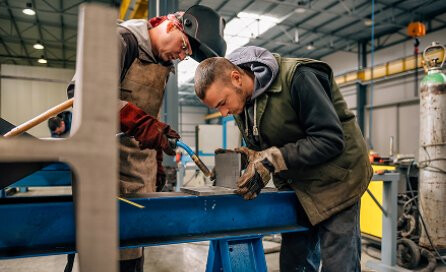
Third, companies are investing more in training and professional development, as finding fully qualified specialists on the labour market is becoming more difficult.
At the same time, many countries are trying to encourage more young people to choose industrial careers by expanding vocational education and training programmes.
Conclusion
The shortage of welders and steel structure fitters in Europe is not a temporary phenomenon. It is largely driven by demographic changes and by increasing demand for skilled workers in infrastructure and energy projects.
In many European countries, welding-related professions are currently among the most sought-after jobs in the industrial sector. This situation is likely to continue in the coming years, as generational replacement and new industrial investments will continue to increase the demand for qualified workers.
Sources and market observations
EURES – Report on Labour Shortages and Surpluses in Europe
https://www.ela.europa.eu
Cedefop – Skills Forecast and Labour and Skills Shortage Index
https://www.cedefop.europa.eu
Barometr Zawodów 2026 – Polish Labour Market Forecast
https://barometrzawodow.pl
Bundesagentur für Arbeit – Skilled Labour Shortage Analysis
https://statistik.arbeitsagentur.de
NAV Norway – Business Survey 2025
https://www.nav.no